Eliminate debt faster.
Track balances, repayments, and progress. See what you owe, what it costs, and what to pay first.
What you get
Everything in one list
Bank loan, salary advance, susu, owing a friend. One total instead of five mental notes.
Monthly load
See how much of your salary goes to debt repayments each month.
Payoff dates
Know when each loan ends if you keep paying as planned.
Interest in plain GHS
Total interest over the life of the loan, not just the monthly instalment.
Extra payment math
See what happens if you add GHS 50 or GHS 200 to one payment.
Tied to your budget
Debt payments count as spending in your monthly plan.
What this is
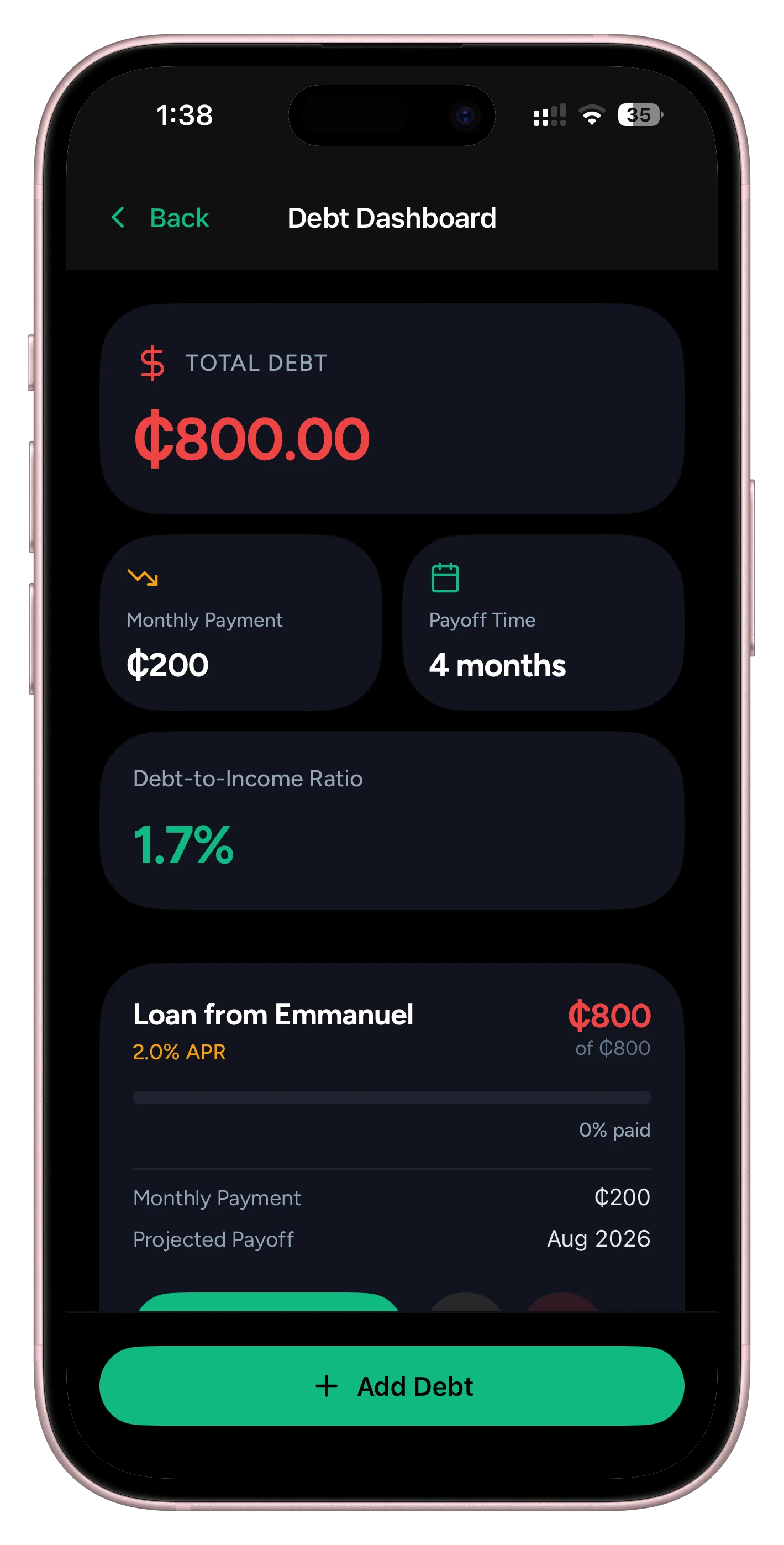
Most people know they have debt. Few know the full number. The debt dashboard is a single screen for every loan, advance, and balance you are paying down. You enter what you owe, what you pay monthly, and the app does the rest.
How it works (step by step)
1. Add each debt. Name it (e.g. "Fidelity personal loan"), enter remaining balance, interest if you know it, and monthly payment.
2. See the totals. Total owed across all debts. Total going out each month. That is your real debt load.
3. Watch progress. Each payment reduces the balance. You see which debts are almost done and which are barely moving.
4. Try "what if". Add an extra GHS 100 this month. The app shows how much interest you skip and how much sooner you finish.
Debt-to-income (in plain language)
If half your salary goes to loans, saving and emergencies get hard. CediWise compares your debt payments to your income and flags when the ratio is high. It is a simple health check, not a lecture.
Common in Ghana
Salary advances from work. Mobile money loans. Susu or informal borrowing. Credit from shops. Keeping these in your head is stressful. Writing them in one app is how you decide what to clear first and when to stop borrowing.
Works well with
- Budgeting tool so repayments are part of your monthly plan.
- Salary calculator to know your real take-home first.